McIntosh Yard Protection Tips for Downspouts, Mulch Beds, and Rainy-Season Runoff
A Florida yard can look perfectly fine in the morning and then take a beating by dinner. One hard summer storm is enough to carve trenches through fresh mulch, splash mud onto siding, flood a planting bed, and leave a soggy strip of turf next to the foundation. Around McIntosh, that pattern is familiar. The combination of frequent rain, fast runoff, and long stretches of humidity means small drainage flaws do not stay small for long.
Most homeowners first notice the problem at ground level. A mulch bed thins out near one corner of the house. Pine bark floats into the lawn. Water puddles at the end of a downspout and hangs around longer than it should. Sometimes the issue starts even higher up, with a clogged gutter, a disconnected elbow, or a downspout that simply dumps too much water in one vulnerable spot. In Florida, that is less of a cosmetic annoyance and more of a yard-management issue.
The good news is that protecting your yard does not always require a major rebuild. In many cases, the biggest improvements come from directing roof runoff where it can soak in, spreading water out before it gains speed, and keeping drainage paths clear before rainy season settles in.
Why downspouts matter more than people think
A roof sheds a surprising amount of water in a short time. When that water is concentrated at a downspout outlet, it can hit the ground with enough force to move mulch, expose roots, and compact soil. UF/IFAS guidance consistently points in the same direction on this issue: roof runoff should be directed away from the house and into areas that can absorb it, such as turf, planting beds, rain gardens, rain barrels, cisterns, or other pervious spots on the property.
That advice matters because unmanaged runoff creates two separate problems at once. First, it can pool near the foundation, which is never something you want to encourage. Second, it can strip away the very landscape materials you paid for. If you have ever topped off a bed in spring only to see half of it migrate after a few strong storms, you have already seen the effect.
A lot of homeowners assume that if water is leaving the roof, the problem is solved. It is not. What matters is where it lands, how fast it lands, and whether the ground there can handle repeated soaking. In a Florida rainy season, those questions come up week after week.
The trouble spots around a typical Florida yard
Some areas consistently struggle more than others. Corners of the house often take the brunt because they collect runoff from two roof planes. Front entry beds can wash out because they are shallow and decorative rather than deeply planted. Pool decks and screened enclosures create their own drainage challenges because nobody wants water spilling into outdoor living areas or eroding the edge of the cage line. If you have been researching gutter drainage for pool cages, that concern is well founded. Water needs to move away from the house and the entertainment space without carving up the surrounding soil.
Another common trouble spot is the narrow side yard where one downspout empties into a strip of turf that never really dries. The grass thins, the soil settles, and over time that area becomes the path of least resistance for every heavy rain. Once that channel forms, runoff picks up speed and the damage becomes more obvious.
Then there are the beds with light mulch on a slope. They look tidy when freshly installed, but if runoff from the roof enters at the top edge, the mulch may not stay put. The steeper the grade and the smoother the soil underneath, the easier it is for bark or nuggets to drift downhill.
Start with the path of the water, not the symptoms
When people call about yard damage, they often point to the washed-out bed or the puddle by the lanai. Those are symptoms. The real work starts by following the path of the water from the roofline down.
Stand outside during a moderate rain if you can do it safely, or check immediately afterward. Watch where each downspout discharges. See whether water is overflowing the gutter before it even reaches the outlet. Look for splash marks on the wall, bare soil at the base of the downspout, mulch piled against edging, and low spots in the turf where water stalls instead of soaking in.
This simple walk-around tells you a lot. A bed that keeps washing out may not need different mulch at all. It may need less concentrated flow entering from above. A puddle near the slab may not be caused by poor soil alone. It may be the result of a downspout that is too short or aimed at the wrong place.
Direct runoff into areas that can absorb it
One of the most practical principles in Florida landscape management is to keep stormwater on site when possible and let pervious areas do the work. Turf, planted beds, and purpose-built rain gardens can help slow and absorb runoff better than hard surfaces do. That is especially useful in sandy soils, where water can move quickly across the surface during heavy rain but also infiltrate well when it is spread out instead of dumped in one spot.
That does not mean every downspout should empty into the nearest flower bed. Judgment matters. A lightly planted bed with decorative mulch may erode if it takes direct flow from a large roof section. A broad lawn area may be a better receiver, especially if the water can fan out instead of drilling one hole into the ground. On the other hand, a dense bed with established plants and healthy soil can be a good place to send runoff if the outlet is arranged to reduce force and spread the water.
The main idea is simple: move water away from the house and into a place that can accept it without damage. If your current setup sends water onto a driveway, toward a walkway, or into a low corner next to the foundation, there is usually room for improvement.
Mulch beds need protection from impact and flow
Mulch is great for moderating soil temperature, holding moisture, and giving beds a finished look, but it is not a drainage structure. When downspouts discharge straight into mulch, the material often shifts, floats, or thins out around the impact point. Once the soil beneath is exposed, the next storm does even more damage.
In practice, the most durable beds are the ones that do not receive direct, high-speed runoff. If water must enter a planted area, it helps when the landing zone is stable and the flow is diffused. A bed with layered plant roots and decent organic content will usually handle water better than a shallow decorative strip with fresh mulch over bare sand.
There is also a maintenance angle here that gets overlooked. If you keep replacing mulch without changing the runoff pattern, the bed becomes a recurring expense. This is one of those cases where a drainage adjustment can save both landscape labor and materials over time.
Pool cages, patios, and outdoor living spaces need extra care
Florida homes often have outdoor spaces that sit right in the path of roof runoff. Where a pool enclosure or patio meets surrounding beds, drainage mistakes become very visible. Water can carry mulch onto deck surfaces, stain concrete with soil splash, and create a muddy perimeter that no one wants near a screened living area.
That is why gutter drainage for pool cages comes up so often. The goal is not just to keep water off the deck. It is to prevent repeated erosion around the outdoor space so the whole area stays usable and clean. If runoff exits too close to the cage line or hardscape edge, every storm can push debris into places that are annoying to clean and unpleasant to walk through.
Careful routing matters here. You want runoff directed toward absorbent landscape areas that will not send overflow back toward the pool or patio. Even a small correction in where a downspout ends can make a noticeable difference by August.
Gutters are only as helpful as their condition
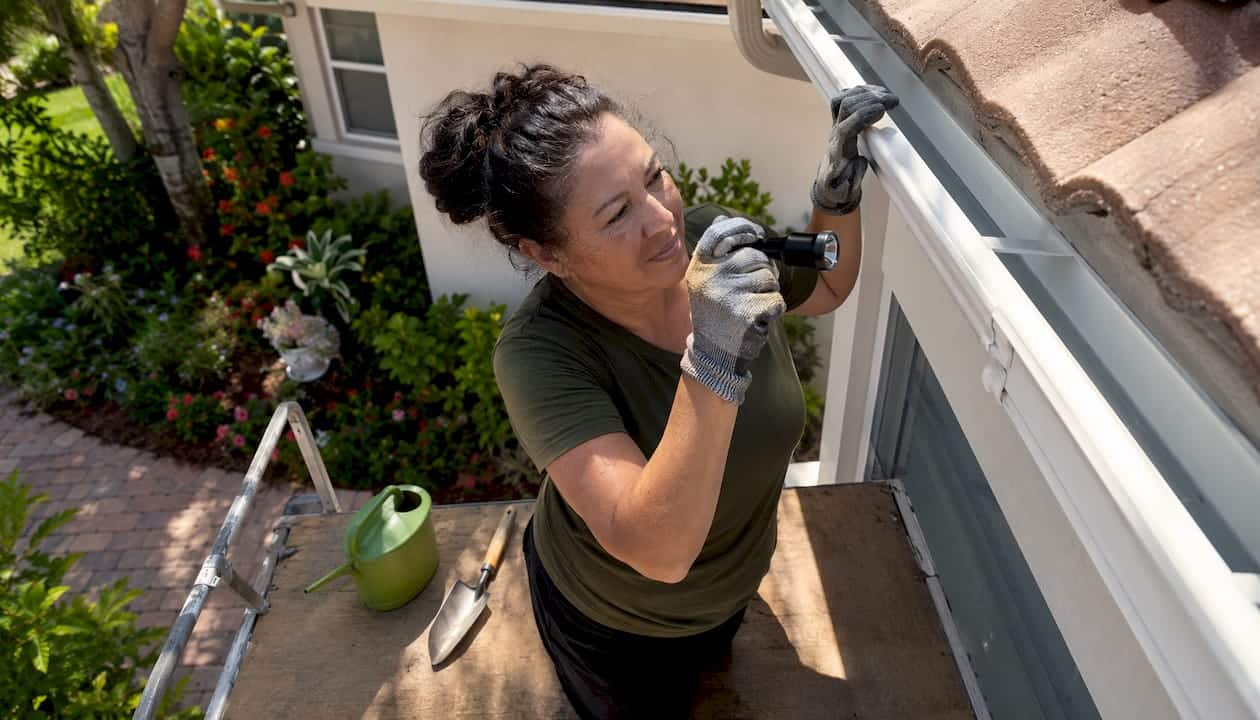
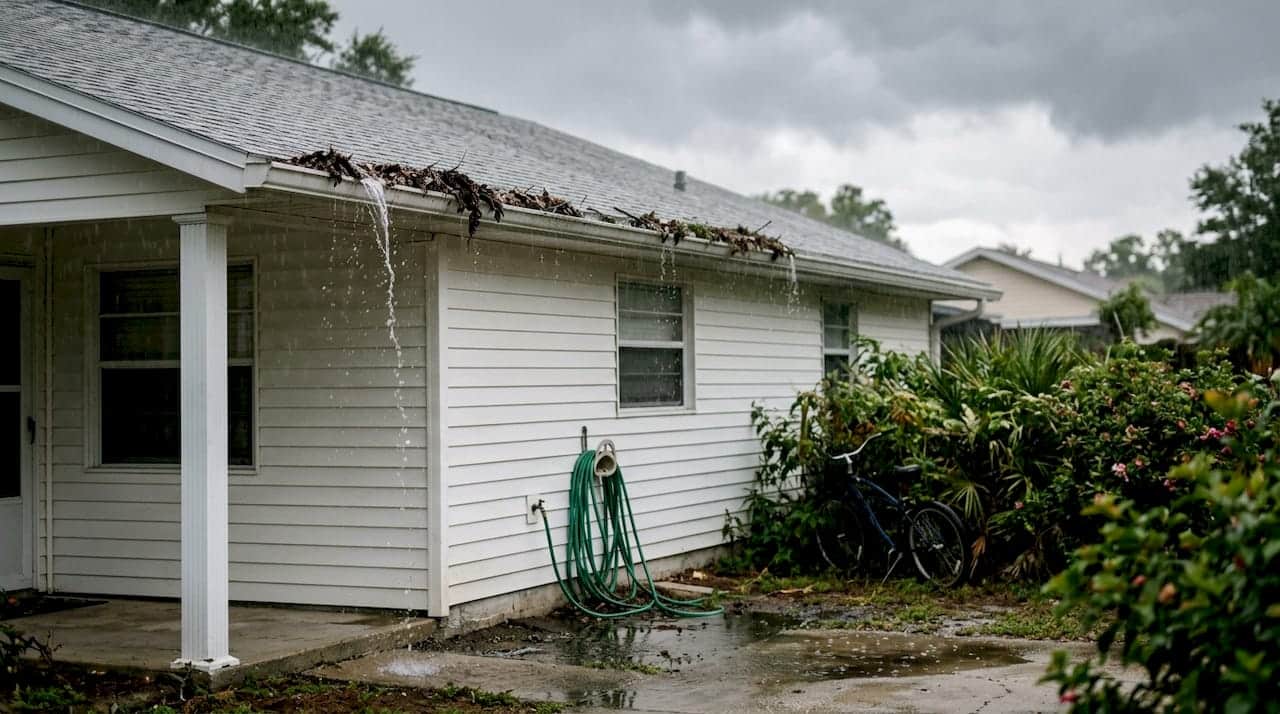
A lot of yard runoff trouble starts because the gutter system is not performing the way the homeowner assumes it is. Leaf litter and debris build up, water overshoots clogged sections, and the overflow lands exactly where you do not want it. Florida guidance is clear that gutters and downspouts need routine maintenance for this reason.
This is also where homeowners get hung up on the question of DIY gutter cleaning or hire a pro. The answer depends on the height of the home, roof access, comfort level, and how much debris collects in your area. If a single-story section is easy to reach and the job is simple, some homeowners handle it themselves. If the roofline is high, slippery, awkward, or heavily clogged, hiring out is usually the better call. The yard does not care whether the cleaning was DIY or professional. It only cares whether water can move freely to the outlet.
The same principle applies to repairs. A loose downspout, separated joint, or damaged outlet can send water in the wrong direction for weeks before anyone notices. That is one reason local searches like gutter cleaning Dunnellon FL or gutter repair Hawthorne FL are so common. People usually do not start looking until the landscape is already showing damage.
Sorting through common gutter myths in Florida
Florida homeowners hear a lot of half-true advice about drainage systems. Some of it sounds plausible until the first major storm proves otherwise. One of the biggest gutter myths Florida homeowners run into is the idea that if the yard is sandy, water will just disappear and there is no need to worry about where downspouts discharge. Sandy soils can absorb water, yes, but concentrated runoff can still erode soil, wash mulch, and pool in the wrong places before it infiltrates.
Another myth is that gutters are only about protecting fascia boards or keeping entryways dry. In reality, they are also a landscape-protection tool. Managed roof runoff helps reduce erosion, helps keep water away from the foundation area, and supports a healthier balance in planting zones.
Then there is the myth that one fix solves everything. A gutter guard will not correct a poor discharge location. A longer downspout will not help much if the gutter above it is constantly overflowing. A fresh layer of mulch will not survive if water keeps hammering the same bed. Effective drainage is usually a chain of small, sensible choices rather than a single miracle product.
If you are replacing or upgrading gutters, think beyond the roof edge
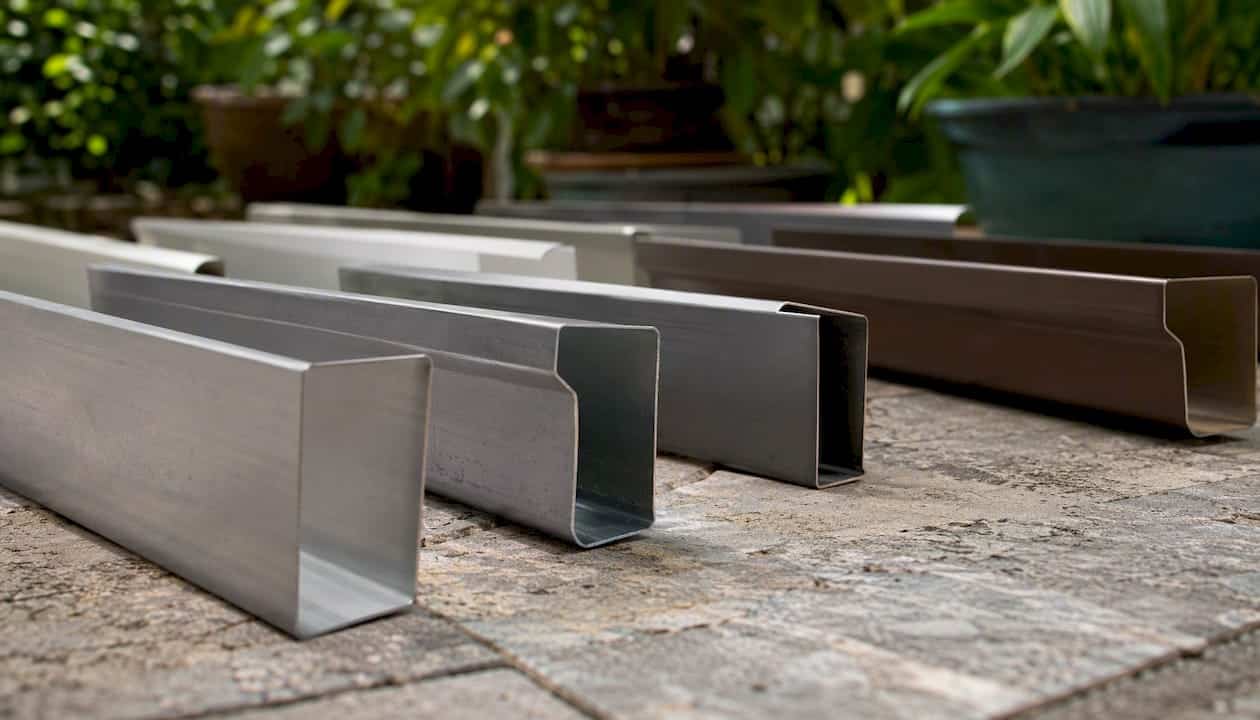
Homeowners shopping for new systems often focus on appearance first, which is understandable. Gutter colors for Florida homes do matter, especially on visible front elevations. Color and profile affect curb appeal, and in some neighborhoods an HOA or architectural review committee may have appearance standards for exterior components. Florida law gives associations authority over exterior appearance standards, while also requiring those standards to comply with building code and not be used to deny conforming installations. In plain terms, style matters, but compliance matters too.
Function should stay front and center. When people compare options such as seamless gutters Williston FL or look into gutter guards Mount Dora FL, they are usually trying to solve a practical problem, even if the search starts with aesthetics or maintenance concerns. A seamless setup may reduce certain leak points. Guards may reduce some debris accumulation, though they do not eliminate the need to inspect the system. What matters for the yard is whether the gutter captures roof runoff reliably and whether the downspouts discharge into sensible locations.
Material and roof type also come into the conversation. Searches for gutters for metal roofs Florida are common because roof design influences how quickly water sheds and how the gutter system needs to perform. The key point is not to choose based on a slogan. Choose based on water behavior, the shape of the roof, and the needs of the landscape below.
And yes, cost matters. Homeowners often ask about gutter installation cost factors Florida because pricing varies with home size, roofline complexity, accessibility, and the scope of any drainage work at the ground. It is worth thinking about the full picture. Sometimes the least expensive gutter replacement leaves the same runoff problem untouched, while a slightly more thoughtful plan protects the yard and reduces recurring landscape repairs.
A practical rainy-season walk-through
Before the wettest stretch of the year, take one slow lap around the house and look for these issues:
- Downspouts that discharge too close to the foundation or into bare, eroding soil.
- Mulch beds with washed-out channels, exposed roots, or repeated splash marks.
- Gutters that show overflow staining, trapped debris, or sagging sections.
- Turf that stays soggy near corners, side yards, or patio edges.
- Areas around pool cages or outdoor living spaces where runoff leaves mud or debris.
That short inspection catches most of the problems that turn into bigger headaches by midsummer. You do not need a complicated plan to start. You just need to know where water is entering, where it is exiting, and what it does once it hits the ground.
The value of a year-round routine
A year-round gutter checklist Florida homeowners can actually follow is better than a long maintenance plan nobody sticks with. Florida does not give you one neat fall cleanup season and then a break. Debris, humidity, and heavy rain can create issues at different points in the year, so it helps to think in cycles rather than a single annual task.
At the start of storm season, inspect for blockages and look closely at discharge points. During the wet months, keep an eye on places where erosion starts fast. After major storms, check for shifted elbows, detached sections, and washed-out beds. In drier stretches, repair landscape scars while the ground is more workable. That rhythm keeps small drainage flaws from becoming expensive landscape fixes.
This is also when homeowners decide whether they are comfortable with upkeep or want help. If you know you are unlikely to get on a ladder, it is smart to plan for service before the worst weather arrives, not after the beds have already washed out.
Small corrections often beat dramatic overhauls
One of the best things about runoff control is that practical improvements tend to be straightforward. You are not trying to fight Florida rain. You are trying to give it a better route. When runoff is directed away from the house and into areas that can absorb it, the yard usually responds quickly. Beds hold their shape better. Turf stays cleaner. Foundation-adjacent puddling becomes less common. Outdoor spaces need less cleanup after storms.
That is why I usually tell homeowners to resist the urge to start with the most expensive fix. First make sure the gutters are clear. Then check for obvious repair needs. Then look at where each downspout sends water. If a bed keeps failing, ask whether it is being used like a drainage basin when it was never meant to be one.
The yards that hold up best in Florida storms are not always the fanciest ones. They are the ones where water has somewhere sensible to go.
When to stop troubleshooting and call for help
There is a point where observation is not enough. If water repeatedly pools near the foundation, if runoff keeps damaging the same section of the yard despite cleanup, or if high rooflines make inspection unsafe, bring in a qualified gutter professional or landscape drainage specialist. The same goes for homes with complex rooflines, multiple corners feeding a single area, or outdoor living spaces where runoff is affecting usability.
Here are the situations where outside help makes the most sense:
- The gutter system overflows even after cleaning.
- Downspouts discharge into areas that cannot absorb water without erosion.
- Repeated storms keep washing out mulch beds or exposing roots.
- Drainage around a pool cage, patio, or side yard creates mess or safety concerns.
- Roof access or ladder work is not safe for you.
There is no trophy for wrestling with a drainage problem longer than necessary. A good evaluation can save a lot of repeat work, especially when the same trouble spot has already cost you in mulch, plants, or cleanup time.
A yard that survives Florida rain starts at the roofline
When a McIntosh yard gets battered by runoff, the fix is rarely just more mulch. It starts with understanding how roof water moves, where it lands, and whether that part of the yard can handle the volume. Florida-friendly guidance supports a simple approach: direct downspouts away from the house and toward pervious areas that can absorb water on site when possible.
That one principle gutter company in Gainesville goes a long way. It protects the foundation area, reduces erosion, and helps preserve the parts of the landscape you actually want to keep looking good through the rainy season. Pair that with routine gutter maintenance and timely repairs, and you give your yard a much better chance of making it through summer storms without looking like it lost a fight.
If you have been dealing with washouts, puddles, or messy runoff near beds and outdoor spaces, start by tracing the water. In my experience, the yard usually tells you exactly where the problem is. You just have to follow it uphill.